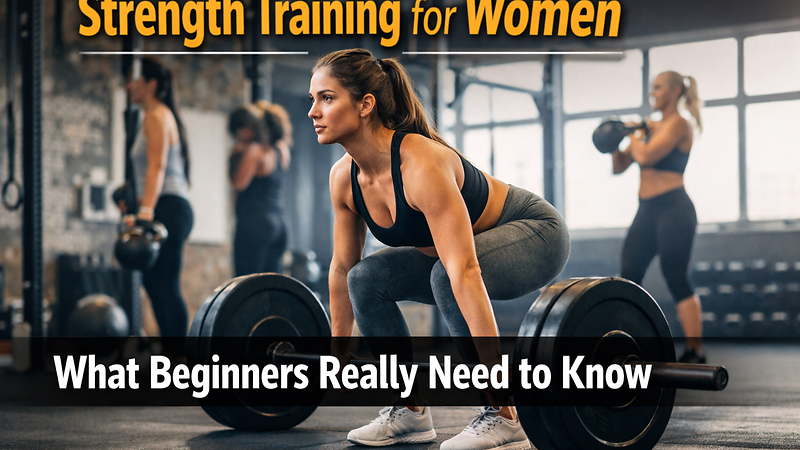

Strength Training for Women: What Beginners Really Need to Know
If you walk into a gym today, the weight room looks very different from what it used to. Just a decade ago, most women stuck to treadmills or group classes while the squat racks were filled almost entirely with men. But something has changed, massively. Women are lifting, deadlifting, hip-thrusting, pushing sleds, swinging kettlebells, and doing it with confidence.
But for beginners, this sudden explosion of information can feel overwhelming. Where do you start? How heavy should you lift? What if your form is wrong? And what about that old myth that lifting weights makes women “bulky”? Here’s what beginners really need to know, minus the noise, the confusion, and the intimidating gym jargon.
1. Strength training builds shape
This is the fear most women start with. But physiologically, women simply don’t produce enough testosterone to bulk up like male bodybuilders. What strength training does do is build muscle tone, improve posture, tighten your core, and give your body the definition most people are actually aiming for.
If anything, lifting weights is one of the most efficient ways to sculpt your body without having to spend hours on cardio. A strong back, strong glutes, and strong legs create the “fit look” that’s trending everywhere right now.
2. Technique matters more than the weight
Most beginners think they need fancy equipment or heavy dumbbells. The truth is, the best place to start is with light weights, slow reps, and proper form. A bodyweight squat or hip hinge taught correctly does far more for your long-term progress than picking up a random heavy dumbbell on day one.
A simple beginner-friendly routine might include:
• Squats
• Glute bridges
• Dumbbell rows
• Step-ups
• Deadlifts with light kettlebells
• Planks
These movements train multiple muscle groups at once, the fastest way to improve strength and metabolism.
3. Strength training is incredible for fat loss
This part often surprises beginners. Cardio burns calories while you do it, but strength training builds muscle and muscle increases your resting metabolism. That means you burn more calories even when you're not working out. This shift is why the “strength training for women” space is booming on social media. The results feel sustainable, not punishing. Instead of chasing calorie burn, women are chasing strength, energy, and visible progress.
4. Your glutes, back and core are your powerhouse
A lot of women start their fitness journey with only abs or leg workouts, but the real magic happens when you strengthen your posterior chain, the glutes, hamstrings, and back muscles that support everything from your spine to your hips.
Glute training, in particular, is a huge trend right now because it:
• improves posture
• reduces lower-back pain
• shapes your lower body
• increases power and stability
Exercises like deadlifts, hip thrusts, and back extensions are extremely effective, even at beginner weight levels.
5. You only need to train three days a week
Beginners often assume they need to work out daily to see results. In reality, your muscles grow when you rest, not when you lift. Training 3–4 times a week is perfect. Focus on progressive overload, slowly increasing weight or reps over time, instead of trying to “go hard” every day. This is also why recovery tools like foam rollers, mobility work, warm-ups, and cool-downs are trending. They help you train smarter, not just harder.
6. The confidence boost is real and addictive
If you talk to any woman who lifts regularly, she’ll tell you the mental impact hits even before the physical changes. Strength training makes you feel capable, grounded, and genuinely proud of yourself. The confidence you build under a barbell or with a pair of dumbbells quietly spills into your daily life, work, relationships, boundaries, everything.
That’s a big part of why this trend isn’t fading. It’s not about aesthetics anymore. It’s about power.