
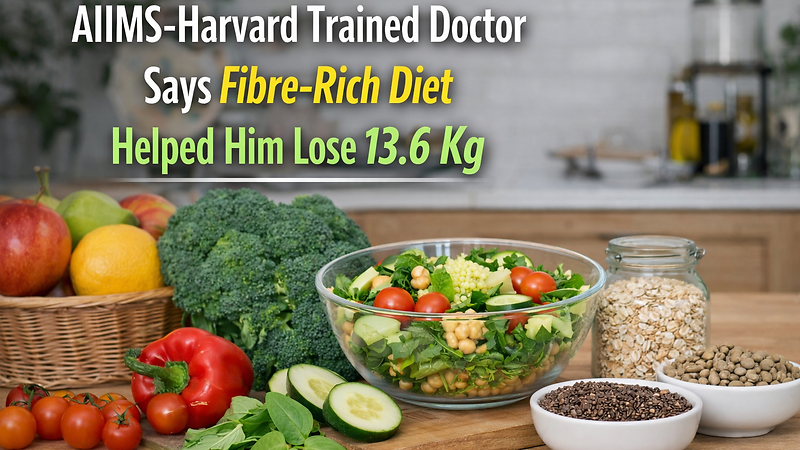

Doctor Trained at AIIMS, Harvard and Stanford Credits Fibre for Losing 13.6 Kg
In a world where protein shakes, calorie counting, and restrictive diets dominate weight-loss advice, gastroenterologist Dr Saurabh Sethi is advocating a much simpler solution, eating more fibre. Dr Sethi, who has trained at AIIMS, Harvard, and Stanford, recently shared on Instagram that the key to his 30-pound (13.6 kg) weight loss was not cutting food drastically but increasing fibre intake strategically.
In a post shared on his social media, he challenged the common belief that weight loss is only about eating less. According to him, the real problem often lies in the type of food people consume rather than the quantity. “I wasn’t overeating because of hunger. I was eating foods that didn’t keep me full,” Dr Sethi explained.
He pointed out that many modern diets include ultra-processed foods, which are typically high in calories but low in fibre. These foods digest quickly in the body, causing rapid spikes in blood sugar followed by sudden hunger, even if a person has already consumed a large number of calories.
Dr Sethi explained that fibre supports healthy weight management through several biological processes.
Slowed digestion: Fibre slows down gastric emptying, which means food stays in the stomach longer. This helps people feel full for a longer period and reduces frequent snacking.
Hormonal response: High-fibre meals trigger satiety hormones such as GLP-1 and PYY, which signal the brain that the body is full. Interestingly, these are the same hormones targeted by many modern weight-loss medications.
Metabolic support: Fibre also feeds beneficial gut bacteria. These bacteria convert fibre into short-chain fatty acids, which can improve insulin sensitivity and help regulate appetite.
Health experts often recommend gradually increasing fibre intake to improve digestion and support weight control. Some fibre-rich foods include:
- Whole grains like oats, quinoa, and brown rice
- Fruits such as apples, berries, and pears
- Vegetables like broccoli, carrots, and spinach
- Legumes including lentils, chickpeas, and beans
- Nuts and seeds such as chia seeds and flaxseeds
Dr Sethi’s experience highlights an important point: sustainable weight loss may depend more on food quality than strict calorie restriction. By choosing foods that keep the body satisfied for longer, people may naturally reduce overeating and improve overall metabolic health.
In a post shared on his social media, he challenged the common belief that weight loss is only about eating less. According to him, the real problem often lies in the type of food people consume rather than the quantity. “I wasn’t overeating because of hunger. I was eating foods that didn’t keep me full,” Dr Sethi explained.
He pointed out that many modern diets include ultra-processed foods, which are typically high in calories but low in fibre. These foods digest quickly in the body, causing rapid spikes in blood sugar followed by sudden hunger, even if a person has already consumed a large number of calories.
Why Fibre Plays a Key Role in Weight Loss
Dr Sethi explained that fibre supports healthy weight management through several biological processes.
Slowed digestion: Fibre slows down gastric emptying, which means food stays in the stomach longer. This helps people feel full for a longer period and reduces frequent snacking.
Hormonal response: High-fibre meals trigger satiety hormones such as GLP-1 and PYY, which signal the brain that the body is full. Interestingly, these are the same hormones targeted by many modern weight-loss medications.
Metabolic support: Fibre also feeds beneficial gut bacteria. These bacteria convert fibre into short-chain fatty acids, which can improve insulin sensitivity and help regulate appetite.
Simple Ways to Add More Fibre to Your Diet
Health experts often recommend gradually increasing fibre intake to improve digestion and support weight control. Some fibre-rich foods include:
- Whole grains like oats, quinoa, and brown rice
- Fruits such as apples, berries, and pears
- Vegetables like broccoli, carrots, and spinach
- Legumes including lentils, chickpeas, and beans
- Nuts and seeds such as chia seeds and flaxseeds
Dr Sethi’s experience highlights an important point: sustainable weight loss may depend more on food quality than strict calorie restriction. By choosing foods that keep the body satisfied for longer, people may naturally reduce overeating and improve overall metabolic health.